




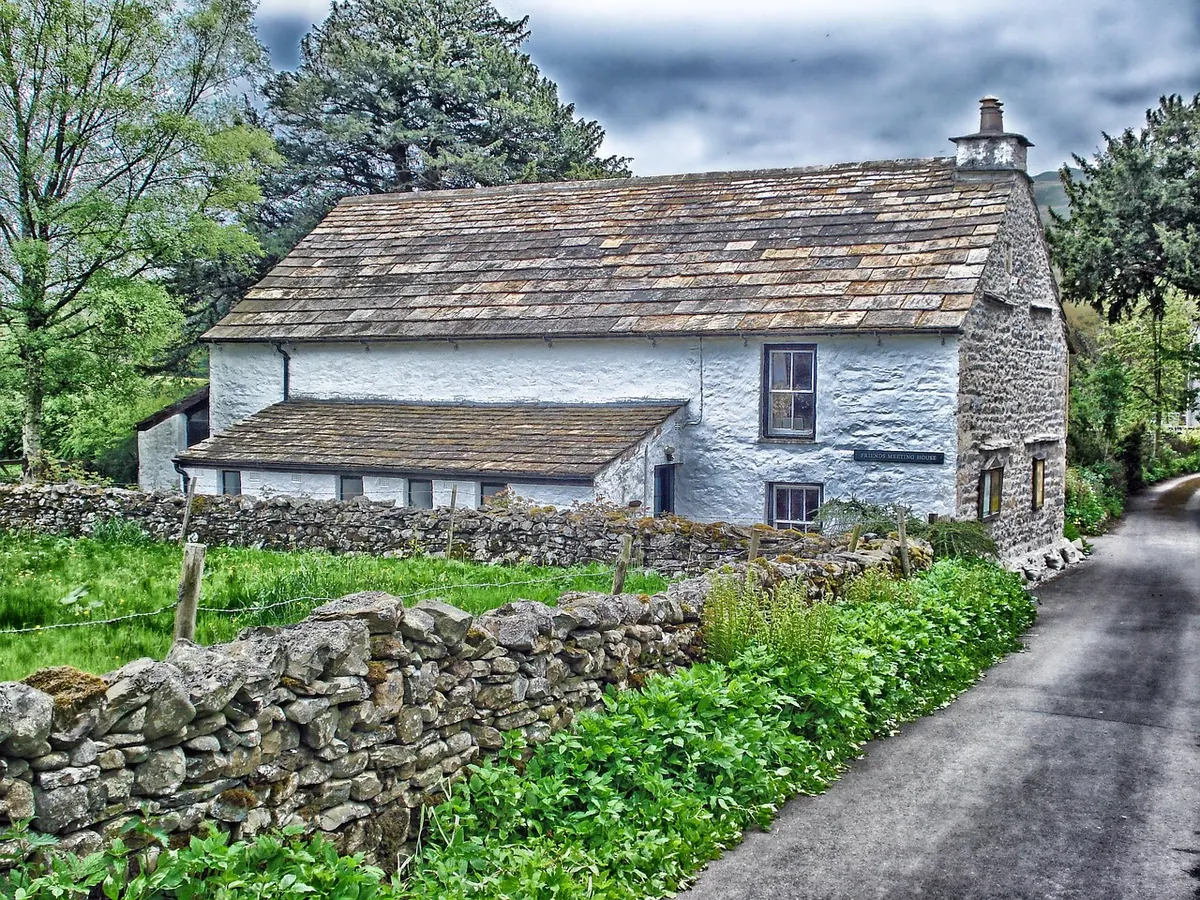
Villages are where fantasy worlds either hold together or quietly fall apart. Readers will accept a floating citadel without blinking, then lose patience with a farming hamlet that has no water, no fields and no reason to exist. The fix is not more detail. It is the right detail. What follows is a checklist you can run any fictional village through, whether it appears for three pages or three hundred.
Start With the Land
Terrain decides almost everything else, so settle it first. Where does drinking water come from: a stream, a spring, a well, a cistern, or a river an hour's walk away? Who fetches it, and how often? If the answer is "the children, twice a day", you have already told the reader something about the village's size and its expectations of childhood.
Next, wind and waste. Tanners, smiths, fish smokehouses and middens should sit downwind of the houses, which means you need to know which way the wind usually blows. Then consider soil and slope. A village on a leeward hillside with thin, stony ground grows rye and raises goats; one on a river plain grows wheat and keeps pigs.
Small geographical details do a lot of quiet work. A watermill needs falling water, so it sits downstream of the drinking supply. Trees dictate whether homes are timber-framed, stone-built or turf-roofed. A village with no local stone and no cart road will not have a stone church, however much you want one.
What the Village Sells, and What It Needs
Any settlement that survives has a surplus and a deficit. Name both. The surplus might be wool, salt, charcoal, eels, cider apples, iron ore, or simply spare hands at harvest. The deficit is whatever the land cannot provide: grain, cloth, iron tools, medicine, news.
That gap creates trade, and trade creates roads. Ask how often a market is held, who travels in for it, whether there is a toll, and whether the river is crossed by bridge, ford or ferry. Measure distance in time rather than miles. The next town is half a day by cart, two days on foot, and impassable for a fortnight when the pass fills with snow.
Then decide how people pay. Remote villages may barter in kind, or use a mix of coin and credit recorded in the miller's head. Whatever you choose, keep it consistent, and let it shape behaviour: a village that rarely sees coin will treat a purse of silver with suspicion as well as hunger.
Customs, Calendars and Small Rules
Rituals Grow From Work
Festivals should attach themselves to the agricultural year, not float free of it. The first ploughing, the blessing of the boats, the night the herring arrive, the midwinter slaughter when animals are killed because there is no feed to carry them through. Crucially, a custom should cost the village something — a day's labour, a barrel of ale, a lamb, a week of fasting. Cost creates friction, and friction creates scenes.
Hospitality Has Rules
Decide how strangers are received. A place by the fire and three days of questions before anyone asks your business feels very different from a village where outsiders sleep in the barn and are watched. Manners vary by status, too: a pedlar, a lord's steward and a returning exile will each be greeted differently.
Do not forget gossip. In a village of two hundred people, news travels through kitchens and across field boundaries faster than any messenger. Rumour is the local information network, and it is rarely kind to newcomers.
Buildings That Tell You Who Lives Here
Architecture should follow materials and weather. Doors face away from the prevailing wind. Windows are small, shuttered and often unglazed. Roofs are steep where it rains and snows, flatter where it does not. Houses may cluster tightly around a crossroads for safety, or scatter across the fields to be near the land.
The centre of the village reveals its values. Is the largest building a church, a tithe barn, a mill, a tavern or a fortified manor? Is there a green, a well, a market cross, a single oak? Defences matter too, and their absence is a statement: a village with no wall and no watchtower either lives in safe country or has learned to rely on someone else's protection.
Step inside one house. A central hearth, a smoke-blackened roof, rushes on the floor, box beds in the wall, animals in the byre at one end. Then choose two sensory anchors — the mill wheel, the bell, the geese, the smell of the midden — and reuse them whenever you return. Recognition is what makes a place feel real.
The Trouble Under the Surface
You do not need a dark lord. Villages generate their own conflict, and it is usually more useful than a prophecy. Land is the classic source: grazing rights disputed with the next village, a boundary stone quietly moved, mill rights, water rights, who may glean in which field after harvest.
Obligations come next. Tithes, rent paid in kind, labour days owed to a landlord's steward. Then vacancies and shortages: the blacksmith's son left for the town, the priest is dying, the well is silting up, the only midwife is seventy. Add generational grudges, the kind nobody can quite explain but everybody respects.
A village is not a backdrop. It is a set of pressures, and your protagonist has to move through them.
Finally, decide who holds authority. A headman, a council of elders, a steward acting for an absent lord, or nobody at all, which is its own kind of problem. Every village needs someone who benefits from the way things are and someone who does not. That pairing is your story engine, and you can start it before your hero arrives.
A Quick Checklist
- Where does drinking water come from, and who carries it?
- What does the village sell, to whom, and along which road?
- What is eaten in late winter, when stores are low?
- How long does it take to reach the nearest town, and by what means?
- Which festivals cost the village something, and who resents paying?
- Who holds authority, and who quietly disagrees with them?
- What are the two sensory details a visitor would notice first?
- What does everyone here know but nobody says aloud?
Putting It to Work
Resist the urge to explain any of this. Choose three details and deliver them through action. Send a character on an errand: fetching a loaf, paying a debt at the mill, carrying water up the hill before dawn. Routine shows economy, hierarchy and weather all at once, and it does it without a paragraph of exposition.
Keep a simple village file as you write: names, who owns which field, the date of the fair, the direction of the mill. Consistency is what readers notice most. If the mill sits upstream in chapter two, it cannot be downstream in chapter nine.
Finally, let the place push back. Rules, obligations, nosy neighbours and small grudges give your protagonist something to work against, and that is far more valuable than scenery. Build the village so it could carry on perfectly well without your story, and it will feel like somewhere people actually live.
Photo: 12019 / Pixabay
Related posts
More stories you’ll love reading